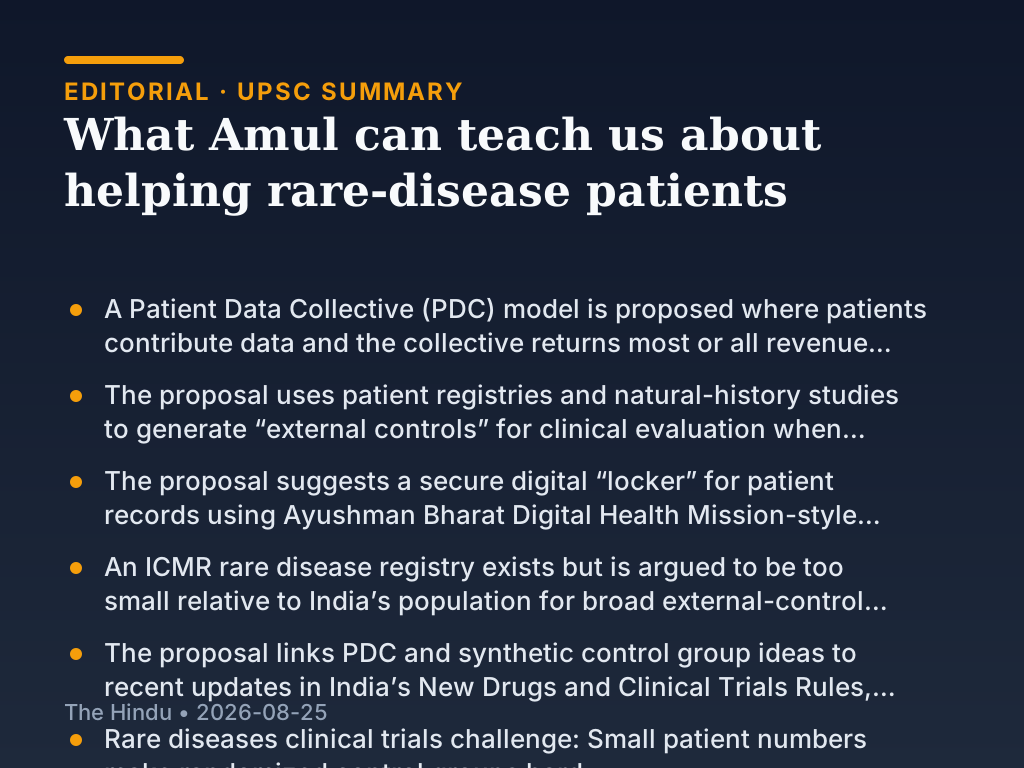
The core policy idea is that rare-disease treatment development depends more on reliable patient data than on sheer laboratory effort. A Patient Data Collective model seeks to build large, trusted patient datasets by linking patient registries, natural-history tracking, and consented data aggregation so researchers can design better trials even when randomized control groups are difficult. If implemented with strong ethics and secure digital governance, this model could make “orphan drug” development feasible and faster across multiple rare diseases.
What happened: a Patient Data Collective model for rare diseases
The proposed Patient Data Collective (PDC) model uses a cooperative-like logic inspired by the Amul structure: patients contribute data, and the collective returns most or all revenue back to patients. The aim is to expand the data supply for rare diseases while keeping patients central in decision-making and benefits.
Key features of the proposed PDC model include data contribution and analysis using AI-based methods with consent and safeguards. The model also aims to pool multiple data sources instead of relying on only one type of registry.
Background and earlier position: why conventional trials fail in rare diseases
In many rare diseases, patient numbers are so small that randomized clinical trials face a practical limitation: forming adequate control groups can be difficult. When control groups cannot be built properly, researchers need alternative evidence strategies that still let safety and effectiveness be assessed.
Related current affairs
- J P Nadda releases knowledge paper on ‘AI in MedTech: Revolutionizing Healthcare Through Artificial Intelligence’
- Ayushman Bharat Digital Mission: Scan and Register Service crosses 25 crore OPD registrations milestone
- The trial of cervi cal cancer therapy: promising new treatment after stopping trials (headline not fully legible)
- Third-party evaluation of ABDM (Jun-Aug 2025): impacts on waiting times, costs, access and efficiency
- ABDM progress update: ABHA creation and registry coverage (HFR, HPR) as of 20 July 2026
- Union Health Minister reviews progress of AIIMS Bibinagar under PMSSY